The Anatomy of the Jay Cloud: Why Jay Peak Gets So Much Snow
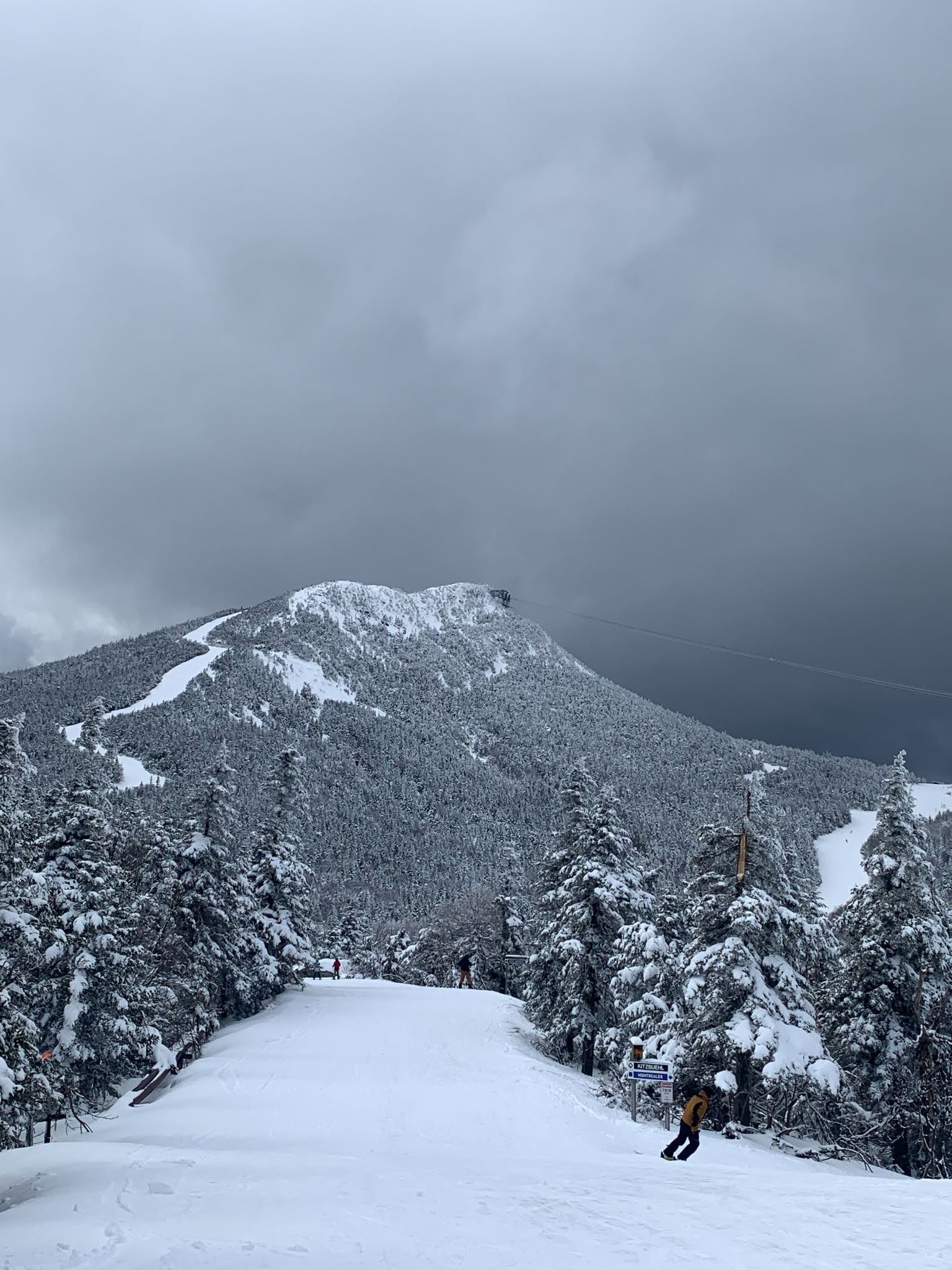
Ask any New England skier about Jay Peak, and within thirty seconds you'll hear three words: "The Jay Cloud."
Having spent 20 years riding Jay Peak through every mid-winter scenario imaginable, I've learned that sitting just five miles south of the Canadian border gives this mountain a personality unlike anywhere else. Jay receives an average of 350+ inches of natural snowfall per season, a stat that routinely beats Western resorts like Jackson Hole, Alta, or Mammoth during mid-winter stretches.
While some chalk up Jay's legendary powder to the Norse God, Ullr, or just pure mountain magic, meteorologists know it as a masterclass in local atmospheric mechanics. Here is the full breakdown of how topography, geography, and cold Canadian air converge to create the East's most famous snow engine.
What Exactly Is the "Jay Cloud"?
The Jay Cloud isn't just a catchy marketing phrase. It's a localized microclimate phenomenon. It describes the consistent cloud cover and hyper-localized snowfall that parks directly over Jay Peak, often dumping inches of freshies on the mountain while surrounding towns just 10 miles away enjoy clear skies or light flurries.
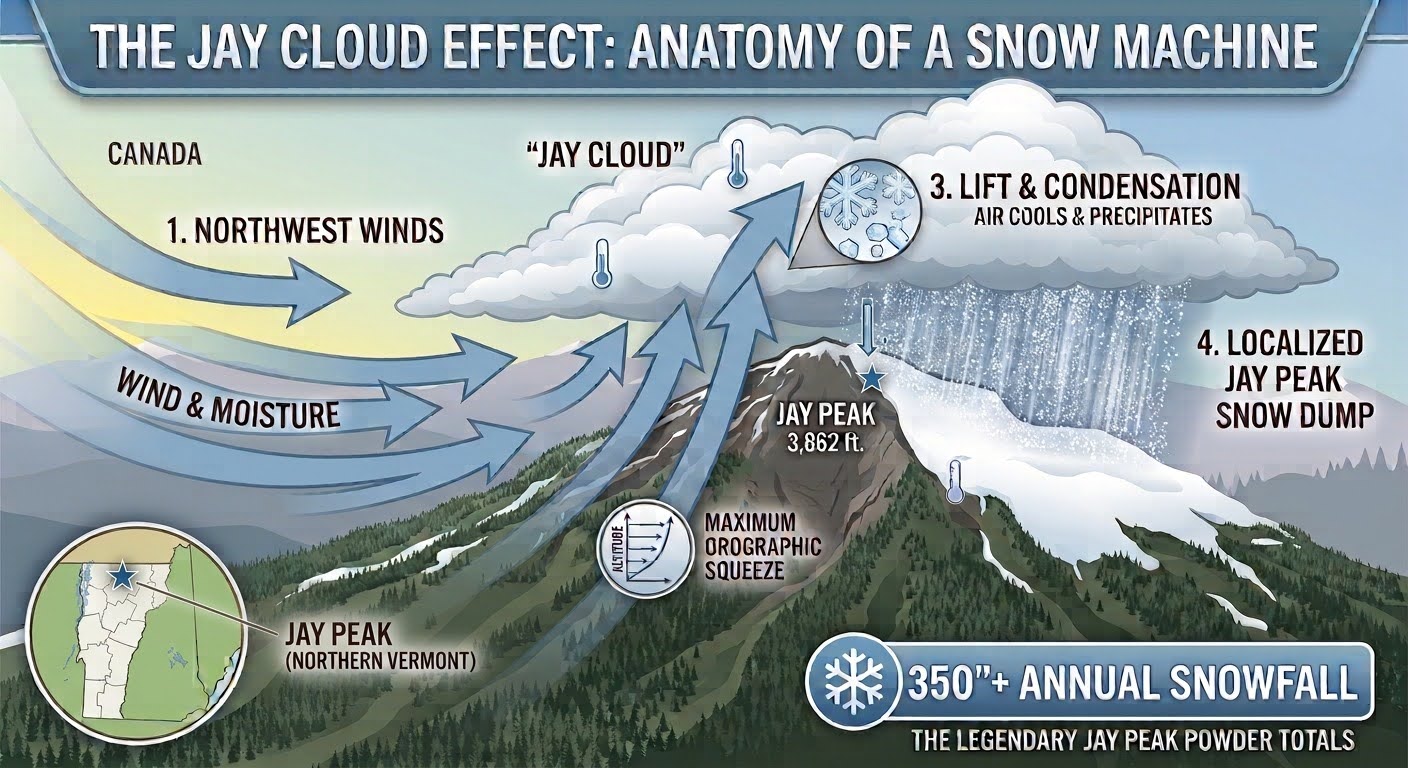
When a storm system passes, the moisture at Jay rarely leaves with it. Instead, cold northwest winds continue to squeeze every last drop of moisture out of the air, keeping snowfall lingering over the summit for days at a time.
The Perfect Storm: 4 Science-Backed Reasons Behind Jay's Snow Totals
While most East Coast resorts rely heavily on snowmaking operations and Nor'easters to fuel their seasonal totals, Jay Peak routinely stacks up foot after foot thanks to standard, everyday northwest winds. Four distinct physical features make this possible:
1. The Adirondack Bypass
The Adirondack Mountains in New York act as a massive moisture sponge for most of northern Vermont. As winter storms move west-to-east across New York, the high peaks of the Adirondacks wring out incoming air masses before they reach Vermont's Green Mountains.
Jay's secret weapon: The Adirondacks terminate further south. Jay Peak sits north of the Adirondack precipitation shadow, giving incoming northwest weather systems an unobstructed, direct route across the Canadian plains and the northern tip of Lake Champlain straight into the mountain.
2. The Orographic "Topographical Funnel"
When moist air hits a mountain, it gets forced upward into cooler altitudes, causing the water vapor to condense and fall as snow through a process known as orographic lift.
At Jay, this process is amplified by a distinct topographical feature. To the northeast, Doll Peak and North Jay Peak form a massive, long northwest ridge. Paired with a secondary ridge sweeping in from Doll Peak to the southwest, these ridges form a physical funnel. Cold, moisture-filled northwest winds are compressed into this natural chute, forcing maximum atmospheric lift directly over Jay Peak's 3,862-foot summit.
3. Lake-Enhanced Moisture Squeezes
When atmospheric conditions align, cold winds howling across the open waters of Lake Ontario pick up substantial moisture. As this lake-enhanced air mass travels east across New York and hits the sudden, steep rise of the Northern Green Mountains, Jay Peak acts as the first major impact zone, squeezing out dense snow bands.
4. Latitude and Sub-Zero Preservation
Sitting at 44.93° N latitude, Jay Peak is one of the northernmost ski destinations in the eastern United States. This northern position keeps base temperatures significantly lower throughout the winter.
Lower temperatures deliver two distinct advantages:
- Higher Snow-to-Liquid Ratios: Air masses drop light, dry, fluffy powder rather than heavy, wet snow.
- Winter Rain Resistance & "Sleeper" Pow Days: While mid-Atlantic or lower New England resorts battle mid-winter rain events and the dreaded "January thaw," Jay's elevation and latitude regularly turn bad forecasts into epic riding. When rain is forecasted in the village, and temps are hovering near freezing, that almost always signals that the Jay Cloud is in full effect up top. I've seen days with light flurries forecasted get amplified by the Jay Cloud into an unannounced 36 inches in 48 hours.
Jay Peak Compared to Other New England Resorts
To understand the real impact of the Jay Cloud, compare its annual snowfall averages to other top East Coast mountains:
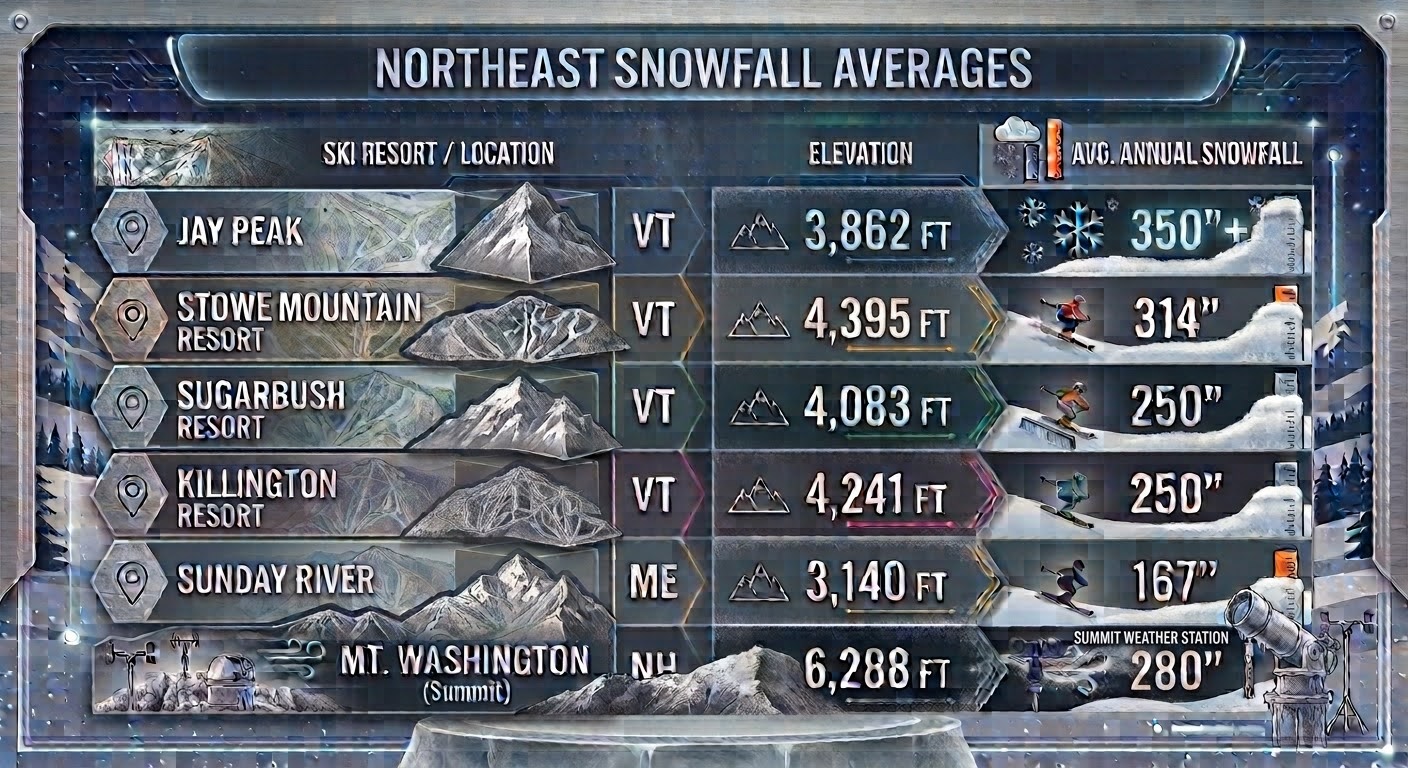
Notice the trend: Despite a summit sitting lower than other resort peaks and Mt. Washington, Jay Peak consistently out-snows them all thanks to its unique funnel topography.
What This Means for Powder Chasers
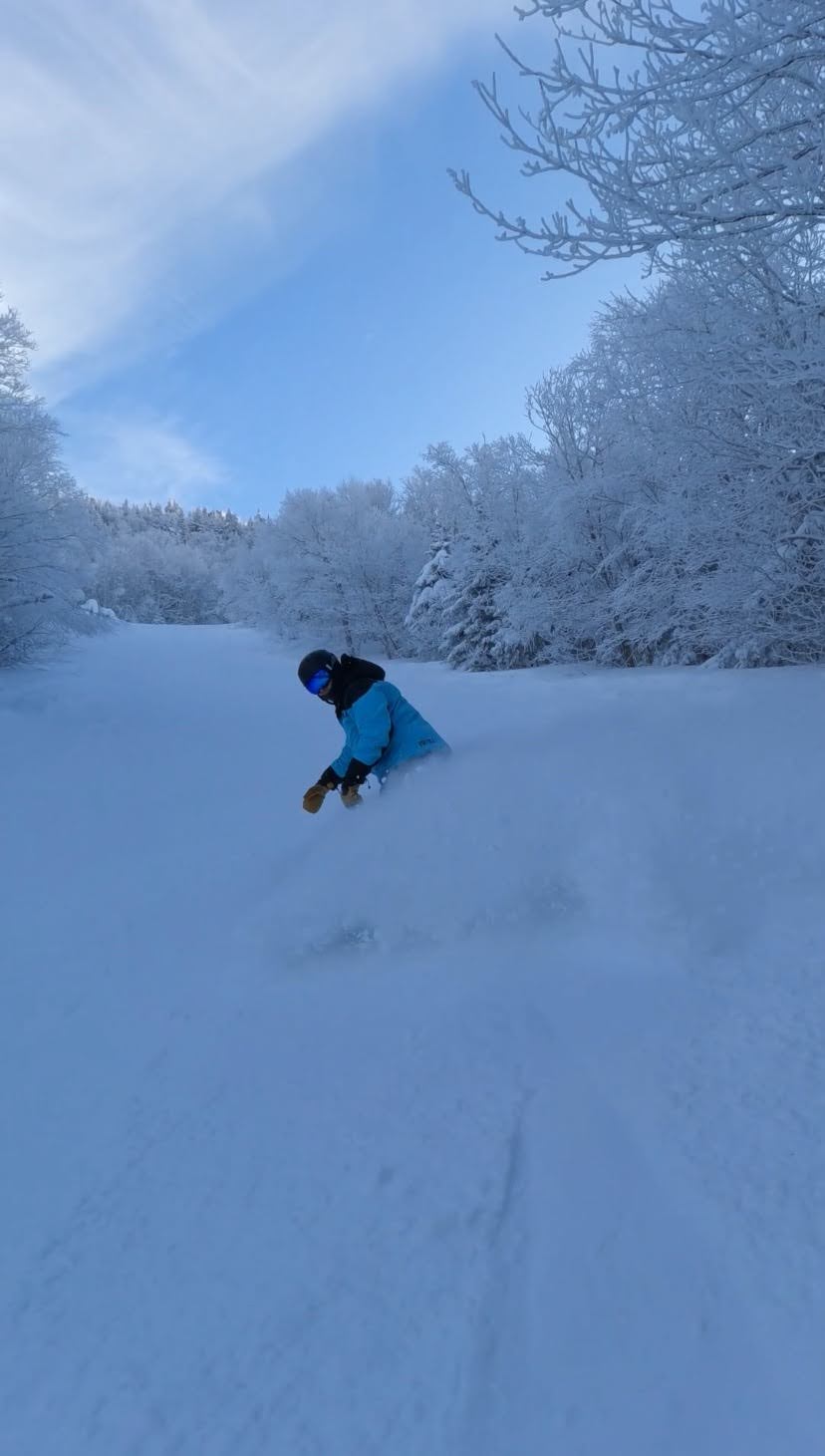
If you're heading north to chase the Jay Cloud powder, keep these insider tips in mind before strapping in:
- Watch the Winds, Not Just the Radar: Standard weather maps often miss localized Jay Cloud powder days. Keep an eye on those northwest winds paired with below-freezing summit temperatures. That's when the snow globe starts working overtime, and every lap turns into free refills.
- Prepare for Extreme Cold & Wind Holds: Exposure to those northwest winds brings serious arctic wind chills. There's a reason the Green Mountain Flyer is nicknamed "The Freezer." Additionally, severe northwest gusts regularly trigger upper-mountain wind holds on the Tram and Flyer. When the upper mountain goes on hold, lapping Timbuktu, or taking mellow laps through the Moons will keep you riding deep snow while everyone else heads to the lodge. Remember to always check the morning lift status and weather report before heading up, and pack proper layers to withstand the elements.
- Explore the Glades & Powder Stashes: Thanks to 350+ inches of annual snowfall, Jay Peak offers some of the best tree skiing in Eastern North America. Getting deep into Andre's Paradise on a fresh powder day is a personal favorite for knee-deep stashes, while dropping into The Face Chutes is the move if you like it steep and spicy. Just make sure to ride with a buddy when dipping into remote glades and unpatrolled tree lines.
Having spent years riding Jay Peak through every kind of winter conditions, I've learned that the legendary Jay Cloud isn't just local folklore. It's the most dependable snowfall producer on the East Coast. When forecasts call for a trace of snow or light flurries, showing up at the mountain with the right gear and a little trust in Ullr almost always pays off in unannounced refills and sleeper powder days. If you're willing to brave the cold northwest winds and respect the mountain's microclimate, Jay will reward you with some of the best tree runs and pow stashes you'll find anywhere in North America.